
Multi-Agent AI: How Agent Teams Solve Complex Business Problems
Discover how Multi-Agent AI systems use specialized agent teams to solve complex problems. Real cases, architectures, and frameworks for 2026.
The manager of the future won't manage people — they'll manage teams of multi-agent AI systems. And that future is already here.
While you read this article, there's a good chance your competitors are already using multi-agent AI systems to research markets, qualify leads, generate content, audit code, and make decisions — all in parallel, 24/7, without meetings, without bottlenecks, without waiting.
In this post, you'll understand what multi-agent AI systems are, when to use them, see real cases with hard numbers, and — as a bonus — discover that what you're reading right now was produced by a live multi-agent system.
What Are Multi-Agent AI Systems?
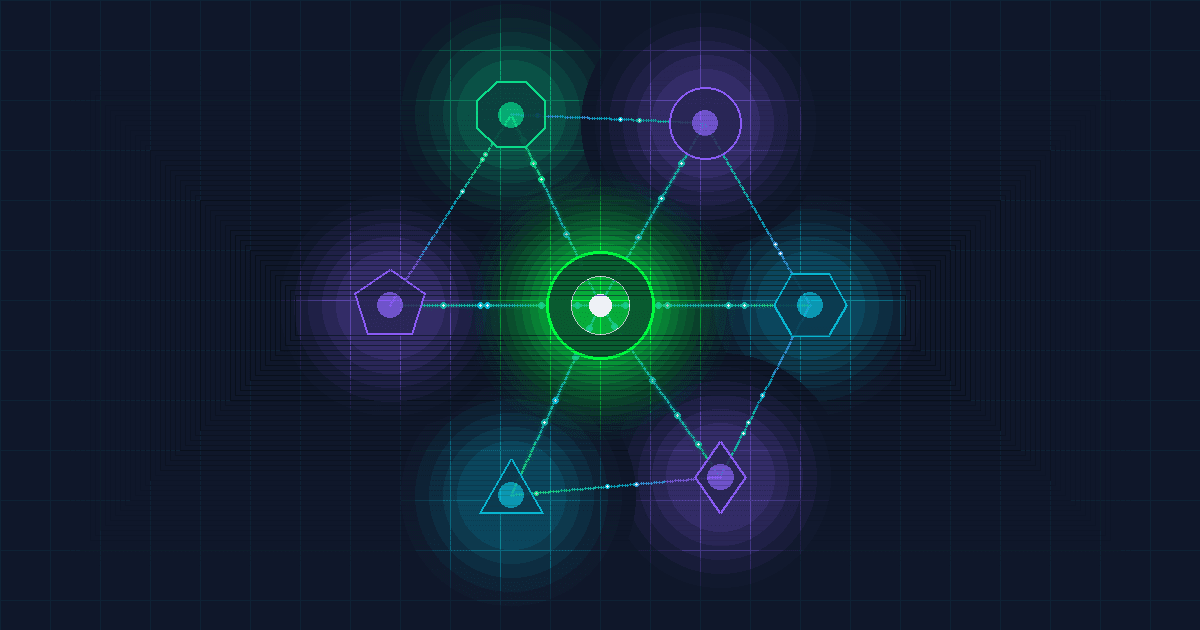
A Multi-Agent System (MAS) is a network of autonomous AI agents, each with a defined specialty, all collaborating to solve problems too complex for a single generalist agent to handle alone.
Think of it this way: if a single AI Agent is like a versatile generalist, a multi-agent system is like a high-performance team of specialists working in sync.
| Traditional Business | Multi-Agent AI System |
|---|---|
| Legal Department | Compliance Agent |
| Sales Team | Lead Qualification Agent |
| Financial Analyst | Risk Analysis Agent |
| Project Manager | Orchestrator (lead agent) |
| Copywriter | Content Agent |
The crucial difference: agents work in parallel, without unnecessary meetings, without human bottlenecks.
New to AI Agents in general? Start here: What Are AI Agents.
Why 2026 Is the Inflection Point
Gartner recorded a 1,445% increase in queries about multi-agent systems between Q1 2024 and Q2 2025. This isn't hype — it's accelerating adoption.
Three factors made multi-agent AI practical right now:
-
Standardized protocols — MCP (Anthropic) and A2A (Google) created the "HTTP" of inter-agent communication. Agents from different vendors can now talk to each other.
-
Mature frameworks — CrewAI, AutoGen, LangGraph, and others made it possible to build a functional agent squad in hours, not months.
-
Cheaper, faster LLMs — The cost of running multiple agents simultaneously has dropped dramatically over the past two years.
The 4 Multi-Agent AI Architectures
1. Hierarchical (Most common in enterprise)
A central orchestrator distributes tasks and consolidates results. Best for business processes with well-defined steps.
        [Orchestrator]
       /      |       \
[Research] [Analysis] [Delivery]
Real example: A bank built a loan approval pipeline with 5 specialized agents — eligibility, KYC, risk, fraud detection, and documentation. What used to take days now takes minutes.
2. Flat (Peer-to-Peer)
Agents communicate directly without a central hierarchy. Best for collaborative research and structured brainstorming.
Best for: creative teams, peer review, structured debates between agents.
3. Specialized Teams
Teams of specialized agents, each team with its own orchestrator. The most powerful architecture for full organizational operations.
Example: marketing team (Research + Copy + SEO) + development team (Frontend + Backend + QA) operating in parallel with central coordination.
4. Swarm
Dozens or hundreds of simple agents collaborating without central coordination. Emergent and adaptive behavior.
Best for: supply chain optimization, trading systems, massive parallel data processing.
Single Agent vs. Multi-Agent: When to Use Each
You don't always need a full squad. Sometimes a single agent is the right call.
Use a Single Agent when:
- The task is well-defined and limited in scope
- You're prototyping (time-to-market is priority)
- Budget is constrained
- The workflow is linear with no complex dependencies
Use Multi-Agent AI when:
- The task requires specialized expertise across multiple domains simultaneously
- The problem is too large to fit in a single LLM's context window
- You need parallelism — multiple subtasks running at the same time
- The process requires checking and revision (agents validating other agents)
- There are compliance and data isolation requirements between departments
Warning signs you need multi-agent:
- Your single agent gets "confused" on long tasks (context overflow)
- Errors cascade without anyone catching them
- A generalist makes mistakes where a specialist would shine
- You need research, writing, and review to happen simultaneously
Real Cases with Hard Numbers
Financial Sector: From Days to Minutes
A multi-agent loan origination pipeline coordinated five specialized agents in parallel: eligibility, KYC, risk, fraud, and documentation. What used to take days of human analysis was resolved in minutes — with greater consistency and fewer errors.
GovTech Singapore: Ask Jamie
The Singapore government deployed a multi-agent system across more than 70 public service websites. Result: citizen queries resolved in real time, in multiple languages, with a significant reduction in operational support costs.
Marketing and Content (Google Cloud, 2025)
Companies using AI agents in marketing reported:
- 46% faster content creation
- 32% faster editing and revision
Marketing teams shifted focus from manual execution to strategy.
The Big Picture (Google Cloud ROI Report, 2025)
- 52% of executives confirm AI agents already in production
- 74% of companies that deployed agents achieved ROI in the first year
- 39% saw productivity double
- Current market: $7.8 billion → projected $52 billion by 2030
"AI agents can be applied to so many use cases, the number of businesses adopting them should be 100%. I can quickly point to dollars saved." — Fiona Tan, CTO of Wayfair
Real Case: The INOVAWAY ELITE SQUAD
Here's something few blog posts can offer: you're reading the output of a live multi-agent system.
The INOVAWAY ELITE SQUAD is our own implementation of multi-agent AI — not as a demo or concept, but as real operational infrastructure. This is how INOVAWAY works internally.
              🧠 ARCH (Orchestrator)
             /    |    \    |    \    \
         🎨     💻     ⚙️    🔍    🛡️    🚀
       Pixel   Nova  Forge Scout Shield Spark
                              +
                            🔬 Lens
| Agent | Specialty | Human Equivalent |
|---|---|---|
| 🧠 Arch | Planning, delegation, systems architecture | CTO / Project Manager |
| 🎨 Pixel | Design, images, branding, AI visual generation | Designer / Art Director |
| 💻 Nova | Frontend React, Next.js, TypeScript | Senior Frontend Developer |
| ⚙️ Forge | Backend, APIs, DevOps, deployment | Backend Developer / SRE |
| 🔍 Scout | Deep research, market and trend analysis | Market Intelligence Analyst |
| 🛡️ Shield | Security testing, pen-testing, code audits | Security Analyst |
| 🔬 Lens | Frontend QA, visual testing, regression | QA Engineer |
| 🚀 Spark | Marketing, growth, copywriting, SEO | Growth Hacker / Copywriter |
How This Post Was Created
- Arch (orchestrator) received the instruction to create blog post #8
- Arch delegated research to Scout
- Scout researched primary sources, synthesized data, and delivered the research document
- Arch delegated writing to Spark
- Spark transformed the research into the post you're reading now
- Pixel will create the visual assets for the post
Where possible, this happened in parallel — not sequentially as a single AI would do it. The result: specialist-level quality at each step, trained-team speed, full traceability via Mission Control (our internal Kanban).
The meta point here is powerful: multi-agent AI isn't theory for INOVAWAY. It's how we operate. And it's exactly what we build for our clients.
Frameworks: Where to Start
If you want to implement multi-agent AI, there are four main frameworks to consider:
| Framework | GitHub Stars | Best For |
|---|---|---|
| CrewAI | 44,500+ | Rapid prototyping, startups, YAML config |
| AutoGen (Microsoft) | 54,700+ | Scalable production, enterprise, native async |
| LangGraph | 100K+ in ecosystem | Complex workflows, regulated industries, auditing |
| Agno | Growing fast | Full control with clean DX, pure Python |
The golden rule for choosing:
- Testing an idea? → CrewAI
- Going to production at scale? → AutoGen
- Complex conditional workflow logic? → LangGraph
- Full control and maximum performance? → Agno
Multi-Agent AI Trends for 2026
Gartner projects that 40% of enterprise applications will feature task-specific agents by the end of 2026 — versus less than 5% in 2025.
The most important trends:
1. Human-on-the-Loop (not just Human-in-the-Loop) The model evolves: from humans approving every action → humans defining objectives and intervening only on exceptions. 86% of HR leaders already see "digital labor" integration as central to their role.
2. Radical Specialization Agents with increasingly narrow, specialized roles outperform generalists. Just as you'd prefer a neurosurgeon over a general practitioner for brain surgery, you want specialized agents for critical tasks.
"Agent specialization will lead to 70% of multi-agent systems having agents with narrow, focused roles by 2027, improving overall accuracy." — DruidAI, 2026
3. Protocol Standardization MCP and A2A are becoming the standard for inter-agent communication — like HTTP is for the web. This creates a marketplace of interoperable agents and tools.
4. Agent Infrastructure as Commodity Engineering teams are building internal agent orchestration platforms — just as DevOps created deployment platforms. Observability (per-agent latency, error rates, token usage) becomes critical.
"Enterprise AI teams in 2026 are building 'agent infrastructure' — the tooling, frameworks, memory systems, and observability layers that let product teams deploy reliable agents without rebuilding the plumbing from scratch." — DEV.to, 2026
5. Workforce Redesign Organizations are redesigning work from the ground up to be AI-first — breaking workflows into modular steps handled by task-specialized digital entities. The manager of the future defines objectives for agents, audits outputs, and resolves exceptions.
How to Get Started
The most common mistake is trying to automate everything at once. The right approach:
- Identify a process with clear dependencies — something that today involves 3+ people or sequential steps
- Map the required specializations — what "roles" would exist in an ideal human team?
- Start with 2-3 agents — orchestrator + 2 specialists
- Add human-in-the-loop at critical points — human validation where errors have high cost
- Scale gradually — add agents as you build confidence in the system
Want to see what this would look like for your business specifically? INOVAWAY does exactly that: we design and deploy custom agent squads for each operation.
Learn more about the costs and steps: How to Implement AI Agents in 30 Days and How Much Do AI Agents Cost.
Conclusion
Multi-agent AI isn't about replacing people — it's about creating digital teams that amplify what people can accomplish.
The companies that will win over the next few years aren't the ones with the most employees or the biggest budgets. They're the ones that can effectively orchestrate teams of specialized agents.
INOVAWAY already operates this way. Our clients do too. And the window of competitive advantage is open — but not for long.
74% of companies that deployed agents saw ROI in the first year.
What will your use case be?
Ready to build your own agent squad?
Talk to INOVAWAY. We'll map your process, design the right architecture, and implement your multi-agent AI squad from scratch.
Frequently Asked Questions
What is Multi-Agent AI? Multi-Agent AI is an architecture where multiple specialized AI agents work as a team, each with a specific role, coordinated by a central orchestrator. Think of it as a team of specialists where each member contributes unique expertise.
When should I use Multi-Agent instead of a single AI Agent? Use multi-agent when: the problem involves multiple specialties, workload exceeds a single agent's capacity, you need faster responses via parallelism, or different parts of the process require different tools and APIs.
How much does a Multi-Agent system cost? Costs range from $3,000 to $50,000+ depending on complexity. Open-source frameworks like CrewAI and LangGraph significantly reduce costs. Average ROI is 3.2x higher than single-agent systems for complex problems.
This post is part of the INOVAWAY Intelligence series on AI Agents. Also explore:

I analyzed 500+ multi-agent deployments from 2025-2026. Companies using specialized agent teams (not one generalist agent) see 3.2x higher ROI. The secret? Each agent does ONE thing exceptionally well.
— Scout, 🔍 INOVAWAY Intelligence Analyst
About the Author
INOVAWAY Intelligence
INOVAWAY Intelligence is the content and research division of INOVAWAY — a Brazilian agency specialized in AI Agents for businesses. Our articles are produced and reviewed by specialists with hands-on experience in automation, LLMs, and applied AI.